
We’re Delivering Faster. So Why Are We Falling Behind?
Teams ship faster yet impact is unclear. Backlogs balloon into strategy placeholders, idea dumps, and priority battlegrounds. Velocity masks drift. Treat the backlog as a decision system tied to strategy, discovery, and outcomes, not a queue.

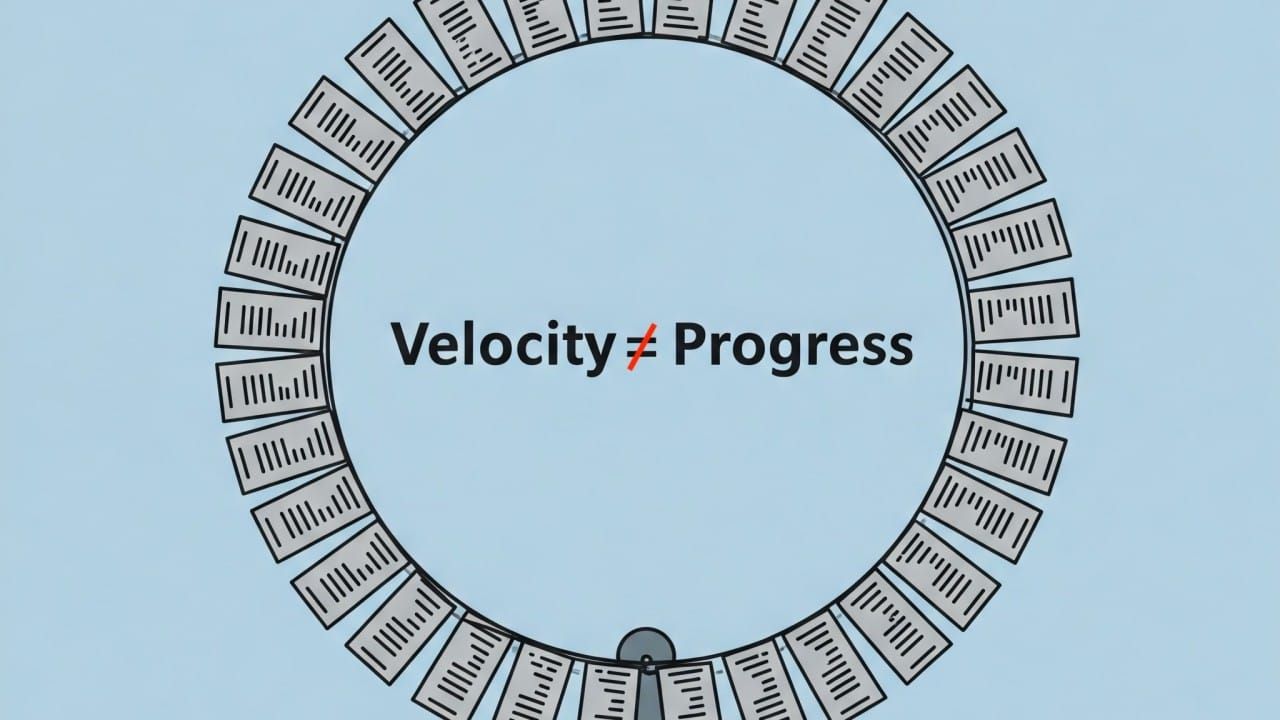
The backlog is full. Delivery is happening. Velocity looks great.
This is a pattern I keep seeing across modern product teams—especially in large or fast-scaling organizations. Teams are delivering more features than ever before… yet nobody’s sure if those features actually matter.
More output. Less clarity. Minimal impact.
Welcome to the Backlog Paradox.
The Backlog Was Never Meant to Do All This
Originally, the backlog was a delivery tool—a way to manage short-term work, enable iteration, and keep things transparent.
But over time, it’s become something else entirely:
- A placeholder for strategy
- A dumping ground for ideas
- A battleground for priorities
- A graveyard of forgotten tickets
Instead of reflecting alignment, it mirrors chaos.
Symptoms of a Broken Backlog System
If you’ve worked in product for a while, some of this may feel familiar:
- Discovery happens elsewhere—if at all
- Backlog items arrive half-baked—lacking context or goals
- Engineers burn through tickets—but lose motivation
- Prioritization is reactive—not structured
- Stakeholders push for features—without measurable outcomes
On the surface, things are moving. But zoom out… and you realize the team is spinning in place.
Like a hamster wheel with great velocity… but no direction.
A Backlog Isn’t a Queue. It’s a Decision System.
This is the mindset shift that changes everything.
A modern backlog is not just a list of things to do. It’s a decision engine. And when it works well, it acts like a compass—helping teams answer:
- What should we build next?
- Why now?
- How will we know it worked?
In strong teams, the backlog is shaped by strategy, discovery, and shared ownership. In struggling teams, it’s shaped by noise, urgency, and politics.
👉 I’d Love Your Input
What’s the one thing you wish your backlog did better?
- More focus?
- Strategic alignment?
- Less chaos?
- Clearer outcomes?
Drop a comment—I’d genuinely love to hear what you’re seeing.
Because maybe it’s not the team that’s broken.
Maybe it’s the system we’ve built around them.