
The Semantic Supply Chain: A Product Lens on Enterprise GenAI

Part 1 of 4: Capability Contract & Inputs
[Views are my own. Not legal or compliance advice.]
When you last prompted a GenAI application, did it feel like persuading a person or programming a machine?
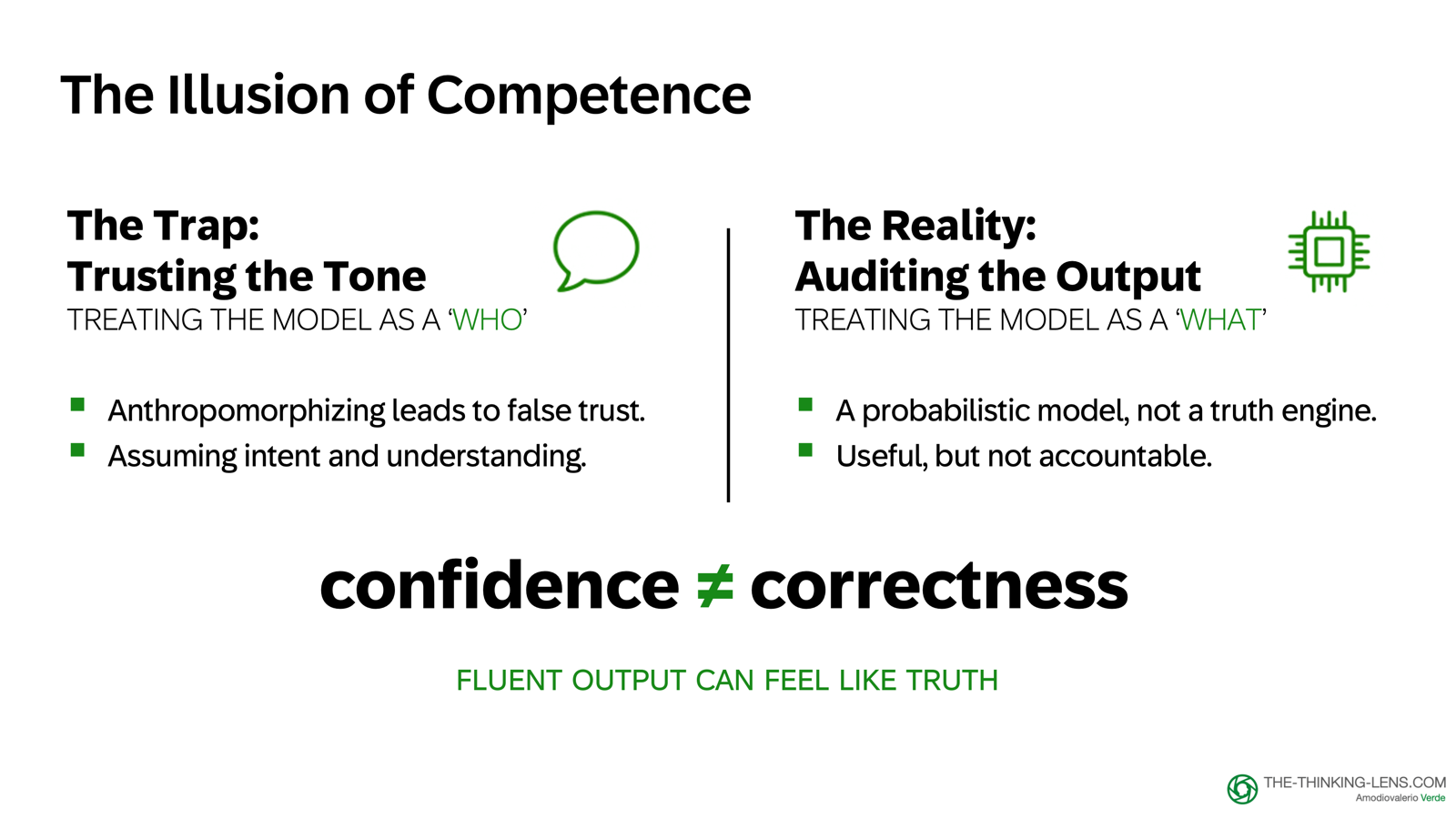
I still catch myself doing it. I start talking to it like a colleague. The more fluent the output, the more I anthropomorphize. The more I treat it like a "who", the more I forget it's a "what".
For product work, that illusion is dangerous. If you treat the model like a person, you will trust its tone. You will mistake confidence for accuracy. You will assume it "understands" your intent.
And that is the trap: fluent output can feel like truth, but confidence is not correctness.
GenAI is not magic. It's a system.
And systems have boundaries, costs, failure modes, and controls. If we don't fundamentally understand how GenAI fails, we are simply shipping avoidable risk.
The Anthropomorphic Trap
In the enterprise, GenAI now powers our daily workflows. But as LLM providers warn, these models can make mistakes. Those mistakes are costly: support tickets, rework, compliance risks, eroded customer trust.
Models are improving, and they will continue improving, but accountability for the product experience remains with us as product, engineering, and design leaders.
The scalable strategy is not hoping the model behaves. It's building system controls.
This isn't about slowing down. It's about shipping GenAI faster with fewer incidents and clearer accountability.
A Risk Heuristic for Product Teams
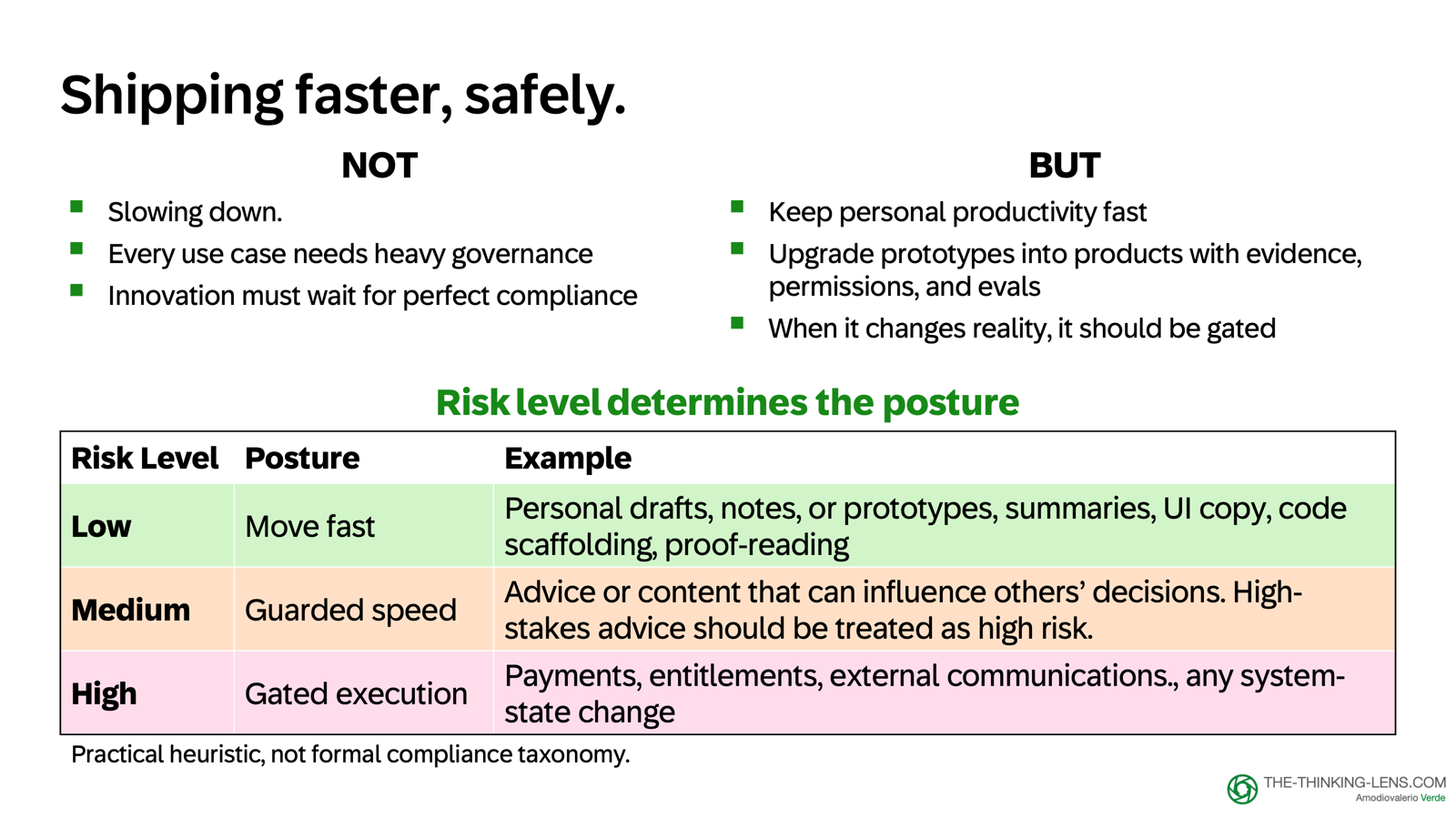
Your posture should depend on the risk. Here's the heuristic I use:
Low Risk (Internal/Drafts): For low-impact outputs like notes or prototypes, move fast. Just ensure you follow data-classification rules: use approved tools and never paste confidential data into public models.
Medium Risk (Decision Support): For content that influences decisions, use "guarded speed". This requires visible evidence, draft labels, and lightweight reviews before content leaves your workspace. Treat high-stakes advice as high risk.
High Risk (Material Impact): Classify as high risk whenever the output can write to a system of record, create an external commitment, move money, or materially affect compliance. For these cases, we need "gated execution".
The heuristic in action:
- Low: "Summarize my notes"
- Medium: "Recommend a next step to a customer"
- High: "Send the email, update the record, or release the payment"
This is a practical heuristic for product teams to balance speed and risk, not a compliance classification.